Normal TSH but Still Tired? 7 Blood Tests to Ask Your Provider About
Oct 21, 2026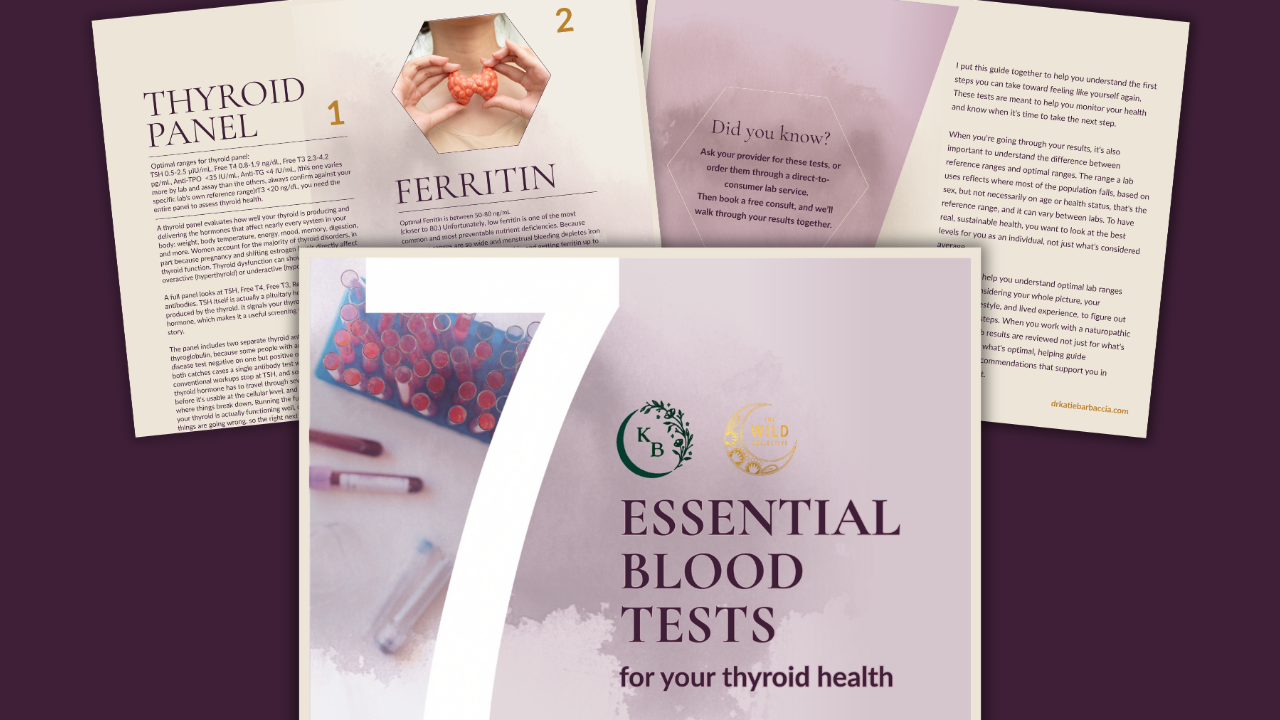
Normal TSH but Still Tired? 7 Blood Tests to Ask Your Provider About
You're exhausted, even after a full night of sleep. Your brain feels foggy. You're cold when everyone else is comfortable, and the scale keeps creeping up no matter what you do.
So you get your thyroid checked. And the answer comes back: "Your labs are normal."
If that sounds familiar, you're not imagining things, and you're not alone. Many women with thyroid symptoms hear some version of "it's just stress" or "it's just your age" before they get real answers.
I know because I was one of them. I was diagnosed with Hashimoto's at 17, after my exhaustion, brain fog, and constant chill were first blamed on stress. That experience is the reason I became a naturopathic doctor.
In this post, I'll walk you through why one common thyroid test doesn't always tell the whole story, and the 7 blood tests worth asking your provider about.
Why TSH alone isn't the whole picture
TSH (thyroid stimulating hormone) is the test most often used to screen thyroid function. It's a signal from your brain's pituitary gland asking your thyroid to make more hormone.
When your thyroid isn't keeping up, your brain "shouts" louder, so TSH goes up. That's why a high TSH usually points to an underactive thyroid.
TSH is a useful screening test. But it's one number, and it doesn't show:
- How much thyroid hormone is actually available to your cells
- Whether your body is converting thyroid hormone into its active form
- Whether your immune system is targeting your thyroid
- Whether you have the nutrients your thyroid needs to do its job effectively
That's where a fuller set of labs comes in.
The 7 blood tests worth asking about
1. A full thyroid panel
A full panel goes beyond TSH to include Free T4, Free T3, reverse T3, and thyroid antibodies (TPO and thyroglobulin antibodies). Free T4 is the storage form of thyroid hormone, and Free T3 is the active form your cells actually use. The antibodies show whether your immune system is involved, which is the case with Hashimoto's, the most common cause of hypothyroidism in the US. Antibodies can rise before TSH changes, sometimes by years.
2. Ferritin
Ferritin measures your iron stores. Your thyroid needs iron to make hormone, and low ferritin is common in women, especially with heavy periods. You can have "normal" thyroid labs and still feel drained if your ferritin is low.
3. CBC (complete blood count)
A CBC checks your red and white blood cells. It can flag anemia, which causes fatigue, weakness, and feeling cold, symptoms that look a lot like hypothyroidism.
4. Vitamin B12
B12 supports energy, nerves, and focus. Low B12 is more common in people with autoimmune conditions like Hashimoto's, and it can cause fatigue and brain fog that overlap with thyroid symptoms.
5. Vitamin D
Low vitamin D has been linked with autoimmune thyroid conditions. It's simple to test, and if you live somewhere with long, dark winters, it's especially worth checking.
6. Fasting glucose
Fasting glucose shows your blood sugar after an overnight fast. Thyroid hormone affects how your body uses energy, so blood sugar and thyroid health are closely connected.
7. Fasting insulin
Fasting insulin shows how hard your body is working to keep your blood sugar steady. It can reveal blood sugar issues earlier than glucose alone, which helps explain stubborn weight gain and energy crashes.
"Normal" isn't the same as optimal
Lab reference ranges are built from averages across a large group of people. Being in the normal range means your result falls within that range. It doesn't necessarily mean it's where you feel your best.
That's why two people with the same "normal" result can feel completely different.
How to bring this up with your provider
- Bring a list. Write down your symptoms and the tests you'd like to discuss.
- Ask what's been checked. "Have my thyroid antibodies, Free T3, and ferritin been tested?"
- Ask for copies of your results. Look at the actual numbers, not just "normal."
- Track over time. One result is a snapshot. Trends tell you more.
Not every test is right for every person, and your provider can help decide what makes sense for you. But you deserve to know these tests exist, and to ask about them.
Get the free guide
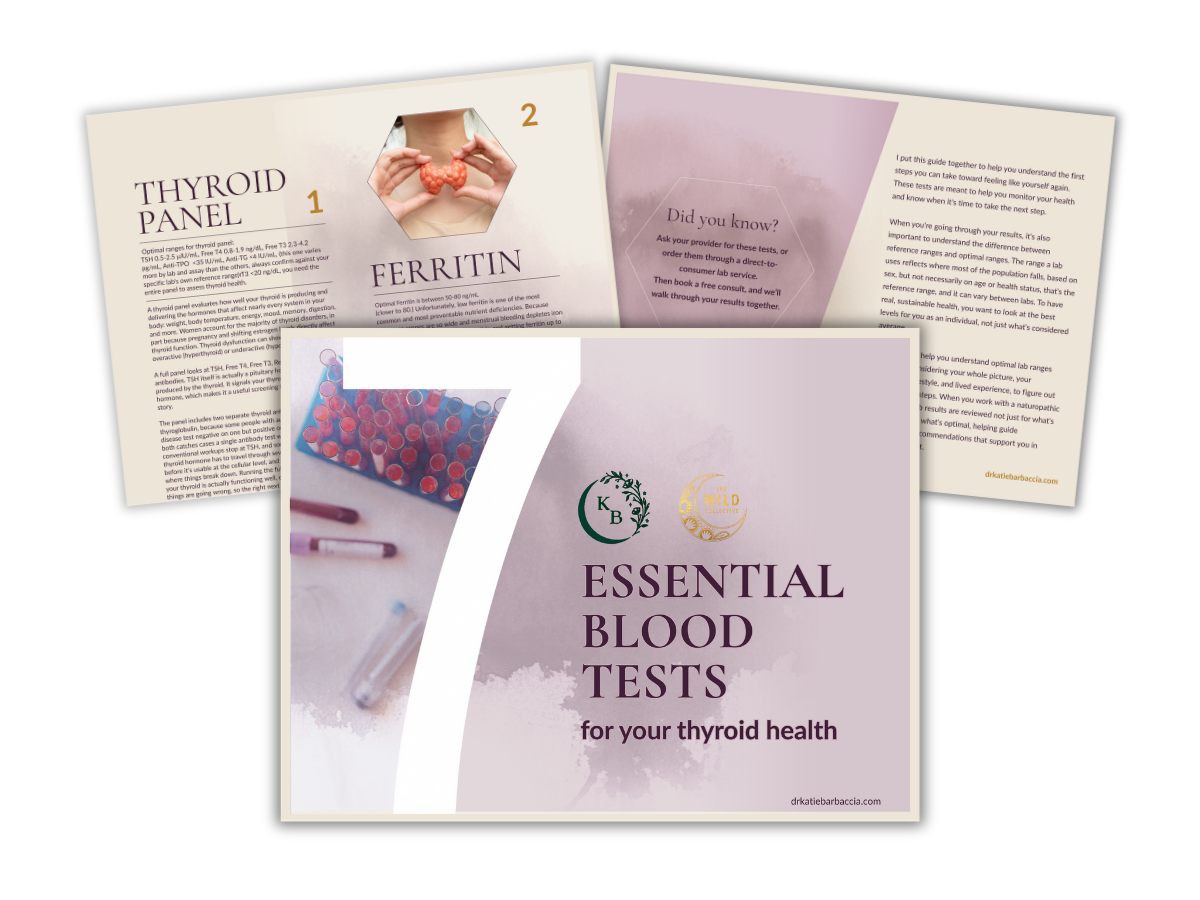
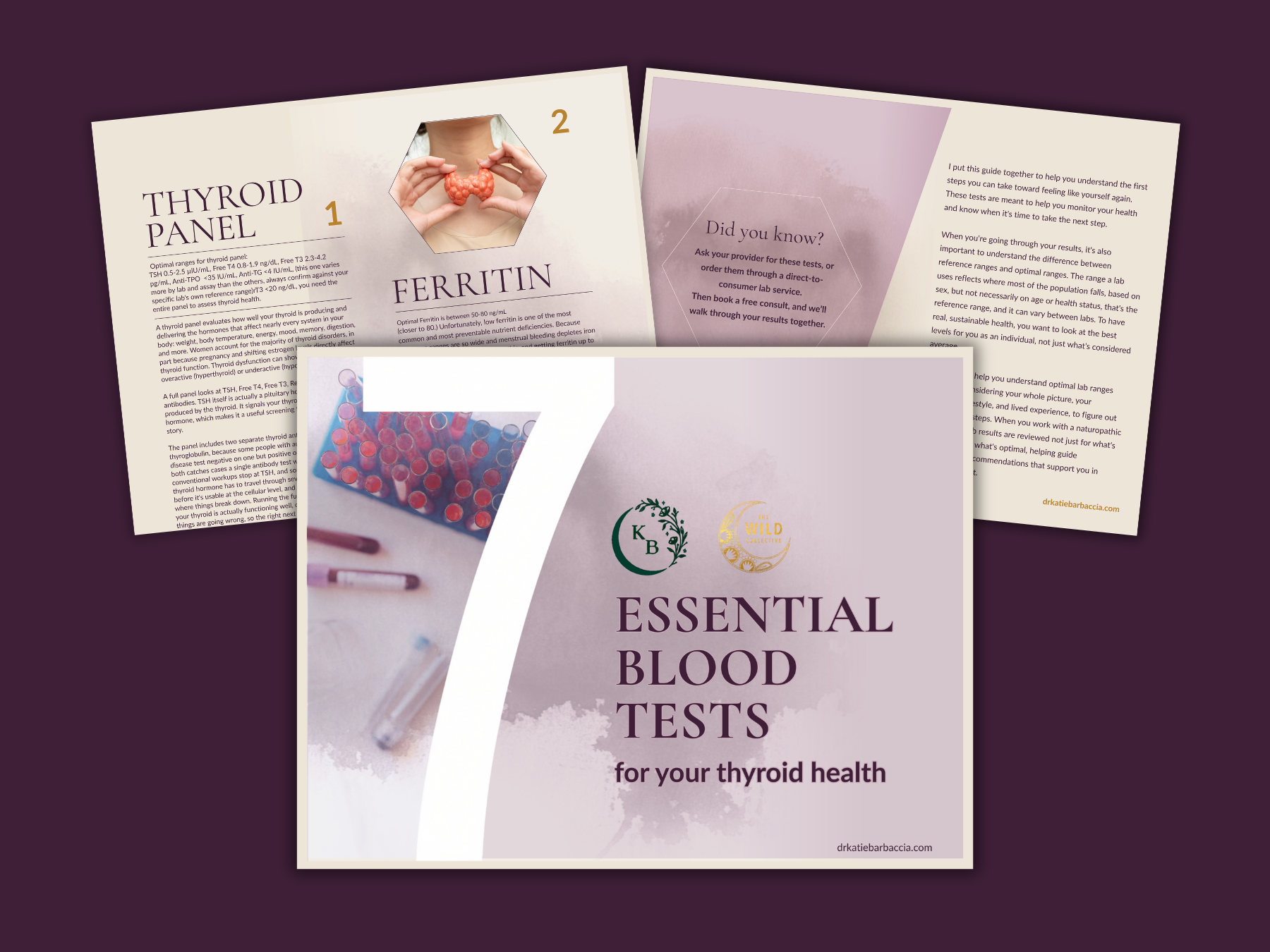
Want all 7 tests in one place, with the optimal ranges to know? Download my free 7 Essential Blood Tests for Your Thyroid Health guide and bring it to your next appointment.
Want help making sense of your results?
Understanding your labs is only half the work. Real change happens when you have a plan built for your body, and support to follow it. That's what I do inside The Evolved Thyroid Method, my 6-month program for women with thyroid conditions who are ready to feel like themselves again.
This post is for education only and is not medical advice. Talk with your provider about your own care.
Dr. Katie B., ND, CPT
Want more? Join the list.
Weekly insights on burnout recovery, nervous system health, and sustainable energy, delivered to your inbox.
Your information stays private. Always.