Camp or Climb: Why Rest Is Strategy, Not Surrender
Jun 01, 2026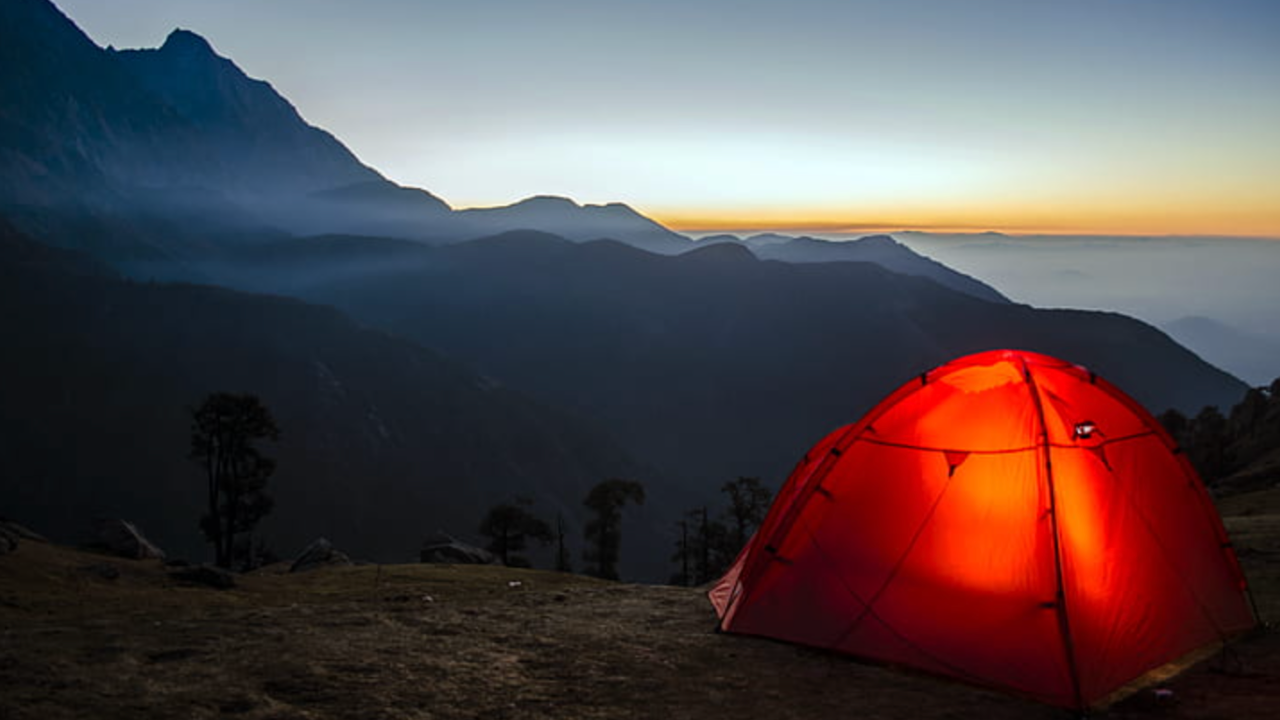
My mom is in her 60s and still one of the most driven women I know. Career woman through and through, but something she told me years ago has resonated with me ever since.
She said: throughout your career, there are opportunities to camp and there are opportunities to climb.
She was talking about work, but I hear it differently now. I hear it when I'm sitting across from a woman who has been pushing her body for years and can't understand why it's not keeping up anymore.
The woman who won't stop climbing
You know her, and maybe you are her.
She's the one who sets three alarms because the first two aren't enough anymore. She's spending $300 a month on supplements and still can't get through the afternoon without wanting to lie on the floor. She's tried the elimination diet, the gut protocol, the functional doctor. More data, more restrictions, more things to track.
She keeps climbing because climbing is what she knows. Adding is what she knows. Pushing through is the only mode her body remembers.
And every time someone suggests she slow down, something in her chest tightens. Because slowing down feels like giving up. It feels like admitting she can't handle it. It feels, honestly, irresponsible.
I had a conversation recently with a woman who said those exact words. She'd been told to stop her intense workouts for a month or two. Just walk. Maybe gentle movement eventually. Her labs were off, her cortisol levels were increased, and everything was a mess.
And she looked at me and said: "Sitting in my body doing nothing feels irresponsible."
I think every high-functioning woman reading this just felt that sentence land somewhere in her body.
What climbers know, that we forget
Here's the thing about actual mountaineers. The most experienced climbers in the world, the ones who summit Everest, the ones who survive the hardest conditions. They all camp.
Not because they're weak or because they've lost their nerve, but because the mountain demands it.
The conditions change, the weather shifts, and your body has limits that don't care about your ambition. And the climbers who choose to ignore the need to rest are usually the ones with the worst outcomes.
Nobody calls them failures for pitching a tent. Nobody says they're going backwards. They're doing the smartest thing a person on a mountain can do: pausing long enough to assess. Do I have the right gear for what's ahead? Is a storm coming? Did I climb too hard for too long and now I need longer to recover before I can keep going?
That pause is not lost progress. It's the thing that makes the next climb possible.
What camping looks like in your health
Camping doesn't mean giving up on feeling better. It means stepping off the trail for long enough to see clearly.
Maybe it means pausing a supplement protocol that isn't doing what you hoped. Maybe it means resting instead of adding another biohack. Maybe it means telling your practitioner "I need to stop for a minute" and letting that be okay.
When I work with someone, one of the first things I often do is simplify. We take things away before we add anything new. Not because what she was doing was wrong. But because when you're doing so much, you can't actually see what's working, what isn't, and what your body is trying to tell you underneath all that noise.
It's like meditation. When you let the noise settle, you can finally see the truth of where you actually are. And from that place of clarity, the next step becomes obvious in a way it never was when you were scrambling.
The tent is where the clarity lives
I know this in my own body, too.
I have Hashimoto's and I still manage hypothyroidism. I'm a naturopathic doctor who hits her energetic limit and I don't always have the perfect routine the influencers perform online. And I've had to learn that respecting my own capacity is not a limitation. It's the reason I can keep doing this work at all.
Sometimes I need to camp because I climbed too long without taking a break. As soon as I recognized this wasn't a failure, everything in my life became smoother.
If you've been climbing for a while and you're exhausted, I want you to consider something. What if this isn't a sign that you need to try harder, find a better protocol, or push through one more season?
What if it's just time to pitch the tent?
The view from camp is where you finally see what you've been missing. And when you're ready to climb again, and you will be, you'll do it with the right gear, the right conditions, and a body that's rested and ready for it.
I talked about this concept and more on the Finding My Frequency podcast with Karen from Frequency Wellness Space. Listen to the full conversation here.
Dr. Katie Barbaccia is a naturopathic doctor in Rochester, NY and the founder of the Energy Reclamation Method. She works with women whose bodies have been running on empty, helping them resolve the pattern underneath the exhaustion.
Want more? Join the list.
Weekly insights on burnout recovery, nervous system health, and sustainable energy, delivered to your inbox.
Your information stays private. Always.